
Longitudinal Databases in Ageing Research
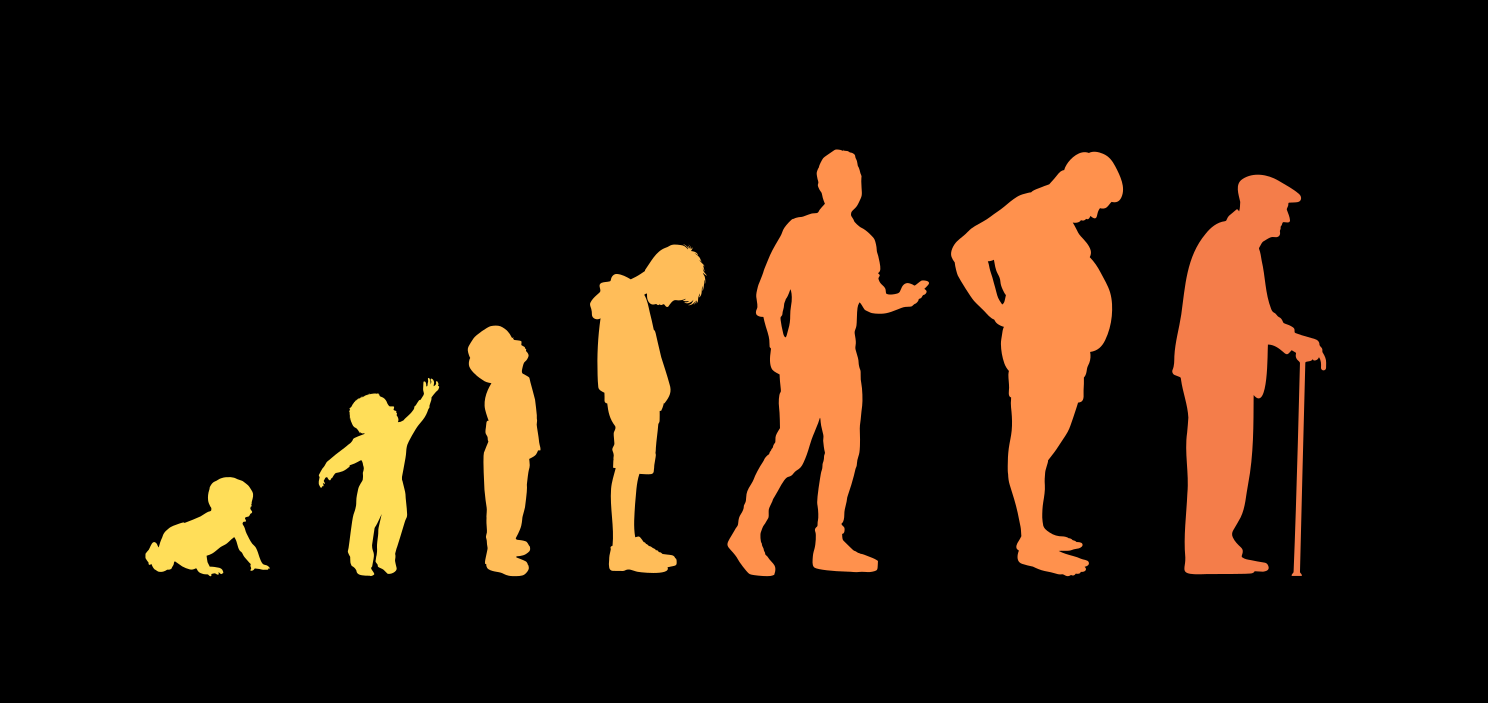
Ageing research revolves around the challenges and opportunities posed by an older population with the aim of better understanding the ageing process across the lifespan [Gordon2021]. Longitudinal databases are crucial tools in this research as they enable the tracking of the same samples (e.g., the same individuals) at different time points and often - in the context of ageing - over a long period of time. This allows the observation of how variables change over time and the detection of trends that cannot be typically identified in cross-sectional studies. Longitudinal studies in older populations have helped with the understanding of the many complicated relationships among primary and secondary risk factors and health outcomes [García-Peña2018]. Having access to retrospective longitudinal data is also particularly important for the development and validation of predictive models, especially when the prediction horizon covers several years and prospective validation would require waiting to observe the desired outcome for many years to come.
Examples of Longitudinal Studies in Ageing
Longitudinal databases collected with the aim of identifying functional, social, and environmental variables as predictors that can change outcomes in ageing can be found across the world [García-Peña2018]: the Mexican Health and Ageing Study (MHAS), the Survey of Healthy Ageing and Retirement in Europe (SHARE), the Longitudinal Ageing Study in India (LASI), the China Health And Retirement Longitudinal Study (CHARLS), the Korean Longitudinal Study of Ageing (KLoSA) and the Indonesian Family Life Survey (IFLS) are all examples involving over ten thousand individuals (over 100k in the case of SHARE) with various years of follow-up.
While a clear focus on ageing is set from the start for databases such as the Baltimore Longitudinal Study of Aging (BLSA) [Ferrucci2008] - America’s longest-running study of human ageing - valuable information about ageing and age-related diseases can also be extracted from large-scale longitudinal databases that were not necessarily created with this specific intention. At Oxcitas we exploit the wealth of information of datasets such as the National Health And Nutrition Examination Survey (NHANES) [nhanes_web], which encompasses data from over 100k participants with up to 20 years of follow-up, and the UK Biobank (UKB) database [ukb_web], which includes over 500k participants with up to 15 years of follow-up, precisely for this purpose.
Challenges in Longitudinal Research
While longitudinal databases provide unique insights compared to cross-sectional studies, they do come with their own set of challenges. One of these challenges is data consistency and quality. Over the time of collection, there may be gaps in data collection, participant attrition (potentially leading to selection bias), and changes in measurement methods. Additionally, since a longitudinal database is collected over an extended period of time, this often results in massive datasets, which can make storage, management, and analysis complex, not to mention the associated maintenance costs. The interpretation of causal relationships is also often made difficult by the influence of many external factors which are hard (if not impossible) to control in advance. Finally, results may only apply to a specific cohort (e.g. people recruited in a specific area or age group), limiting the ability to generalise findings across different populations and areas.
Conclusion
Longitudinal databases are crucial in ageing research, providing long-term data that can provide insight into how and why we age the way we do. Although collecting such data in a consistent, robust, and generalisable way requires a large amount of resources and a well-coordinated effort to ensure meaningful and valuable results, these databases offer unique opportunities. They open the way to the identification of early warning signs of age-related diseases, a better understanding of the multi-factorial changes that occur as we grow older, and the development of interventions that can improve the quality of life in older adults. Undoubtedly, the creation of large-scale longitudinal databases can provide invaluable resources for innovation and discovery and can help to support a healthy ageing population. A clear understanding of the limitations associated with existing longitudinal datasets is also paramount and ought to be considered from the start so that the resulting analysis can provide novel insights into real phenomena within well-defined validity contexts.
References
[Gordon2021] Gordon AL et al (2021). Research into ageing and frailty. Future Healthcare Journal, 8(2): e237-e242.
[García-Peña2018] García-Peña C et al (2018). Longitudinal studies and older adults cohorts. In: García-Peña C, Gutiérrez-Robledo L, Pérez-Zepeda M (eds) Aging Research - Methodological Issues. Springer, Cham.
[Ferrucci2008] Ferrucci L (2008). The Baltimore Longitudinal Study of Aging (BLSA): A 50-year-long journey and plans for the future. Journal of Gerontology: Medical Sciences, 63A(12), 1416-1419.
[nhanes_web] National Health and Nutrition Examination Survey. US National Center for Health Statistics https://www.cdc.gov/nchs/nhanes/index.htm Last accessed on 30/09/2024.
[ukb_web] UK Biobank. https://www.ukbiobank.ac.uk/ Last accessed on 30/09/2024.